
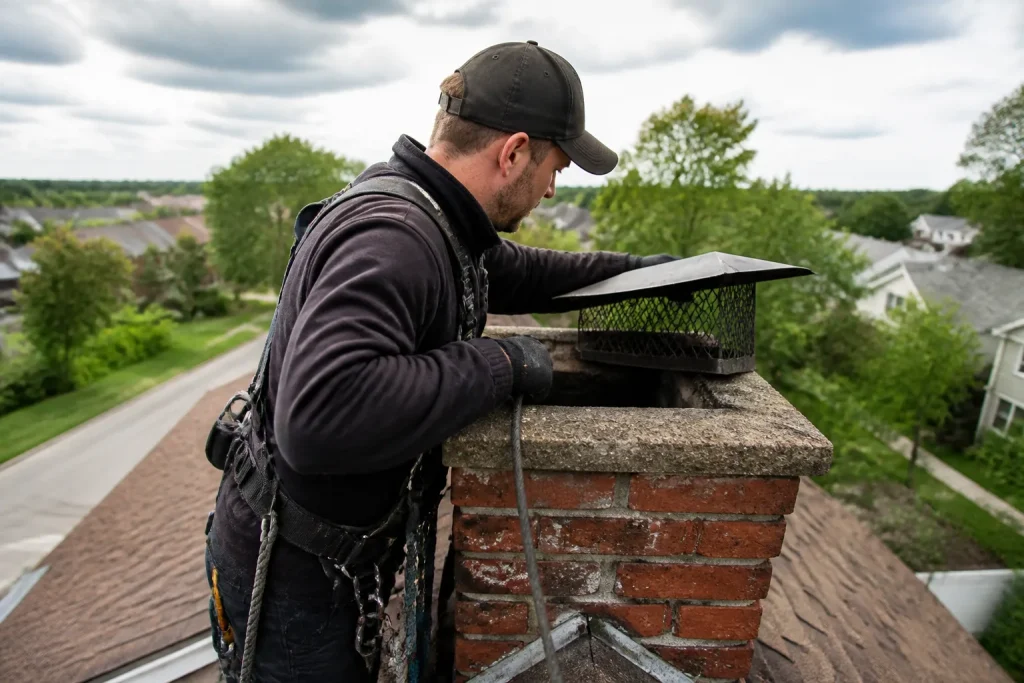
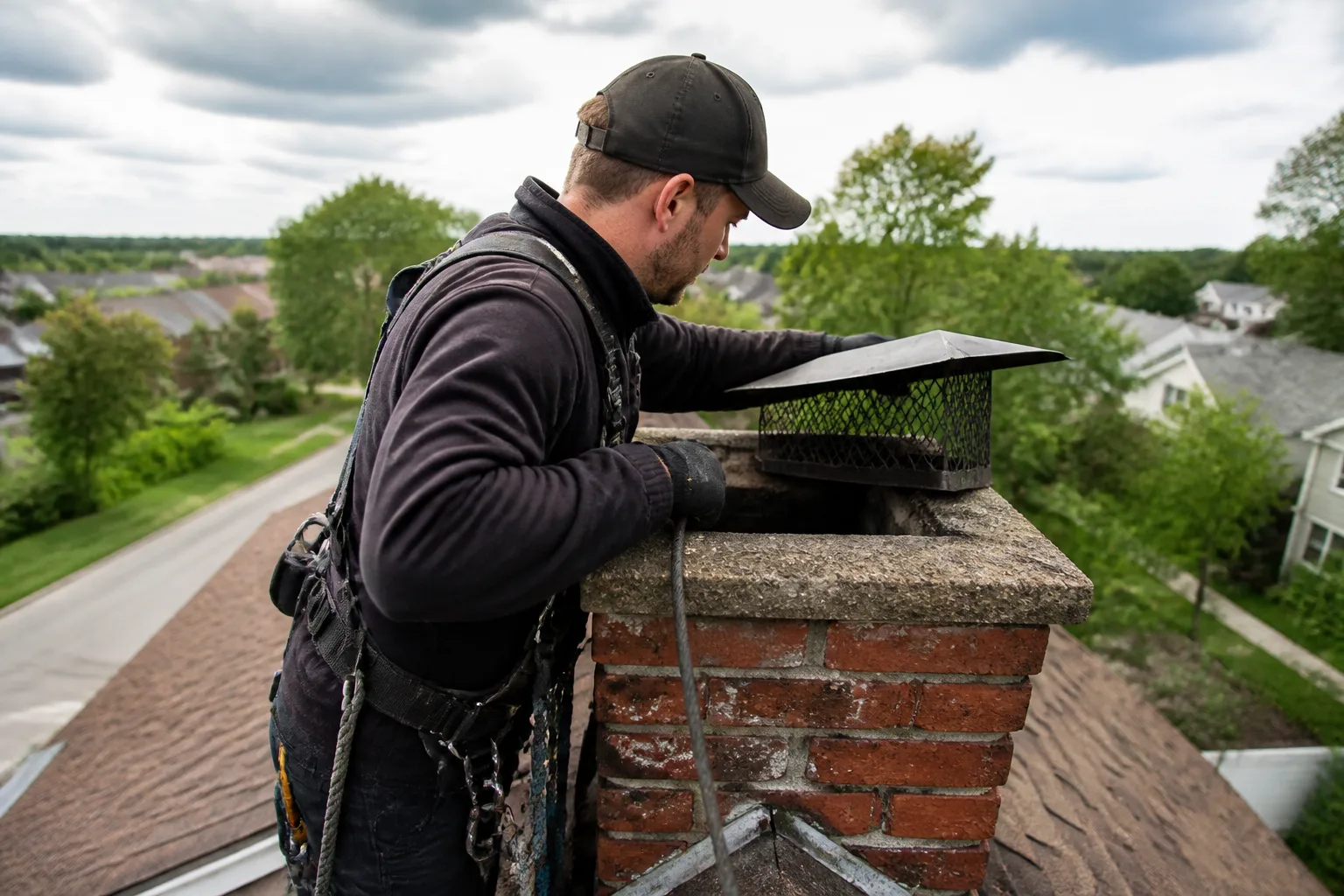
Emergency Chimney Sweep Near Me: What Elgin Homeowners Should Do First
During an active chimney fire, closing the damper feels like the logical move. It’s actually the wrong one, and it can force superheated gases into the living space instead of up the flue. If you’ve typed “emergency chimney sweep near me” into your phone tonight, the sequence of actions in the next twenty minutes matters more than which company you call. This guide walks through that sequence, one chipmunk-gone-wrong at a time. If you’d rather not DIY, call (877) 382-6902.
Key Takeaways
- Leave the damper open during a chimney fire. Closing it traps heat and smoke in your home.
- Get everyone out, call 911, and don’t throw water down the flue.
- A flue that just held a fire has to cool completely before any technician can inspect it safely.
- Three different emergencies (chimney fire, backdraft smoke, carbon monoxide suspicion) call for three different first moves.
- Photos, smell notes, and the last time you ran the appliance make the post-emergency inspection and insurance process faster.
What Are the Three Chimney Emergencies, and How Is Each Handled?
Chimney emergencies fall into three categories, and each one demands a different first response. An active chimney fire is a fire-suppression problem. Heavy smoke rolling back into the living room is an airflow problem. Suspected carbon monoxide from a gas appliance vented through the chimney is a breathing-hazard problem that has nothing to do with visible flame. Treating all three the same wastes the minutes that matter most. In Elgin, where winters push fireplaces into steady use, we see all three play out during the cold months.
Active chimney fire. You may hear a low roaring sound, a crackling that sounds like distant popcorn, or see dense smoke or flames at the top of the stack. The firebox itself might look oddly quiet. Response: leave the damper open, close the glass doors or firebox opening to cut oxygen to the fire, get everyone outside, and call 911. Do not pour water down the flue. Do not close the damper.
Smoke backdraft into the living space. The fire is burning, but smoke is pouring out around the firebox instead of going up. That usually points to a blocked flue, a cold flue that won’t draft, or a pressure imbalance in the house. Response: open a window near the fireplace, make sure the damper is fully open, and stop adding wood. If smoke keeps rolling in, put the fire out safely and evacuate.
Suspected carbon monoxide. Your CO alarm sounds, or you feel headache, dizziness, or nausea with a gas appliance running. Response: get everyone outside into fresh air, call 911, and don’t re-enter until the fire department clears the building. A CO problem is a health emergency, not a chimney-cleaning errand, and the appliance stays shut off until a technician has inspected the vent path.
Why Closing the Damper During a Chimney Fire Is the Wrong Move
Closing the damper during a chimney fire does not smother it; it traps superheated gases and smoke inside your living space. A chimney fire needs heat, fuel, and oxygen to sustain itself, but it also needs somewhere to vent. Close the damper and the flue becomes a pressure vessel with your house as the relief valve. Creosote deposits inside the flue can ignite, and the resulting heat stresses the masonry and any liner inside it. When gases can’t escape upward, they find seams, cracks, and thimble connections instead.
Here is what the correct sequence looks like during an active chimney fire:
- Leave the damper fully open so combustion gases keep moving up the flue.
- Close the glass doors, or the firebox opening if you burn in an open hearth, to cut oxygen to the firebox.
- Get every person and pet out of the house and stay out.
- Call 911 from outside. A chimney fire can spread into the attic or roof structure without obvious signs from the ground.
- Do not throw water on the fire or into the flue. Steam expansion and thermal shock can crack masonry or a liner.
- Do not re-light the fireplace until a technician has inspected the full flue and firebox.
If your fire alarm goes off and your first instinct is to grab a bucket, put the bucket down. That’s the one joke we’ll make in a serious article.
What Does “Emergency Chimney Sweep” Actually Mean?
An emergency chimney sweep is a scheduled sweep, inspection, or repair booked with real urgency after a chimney event, not a technician rappelling down your roof at midnight. Here is the part most homeowners don’t know: a flue that has just held a chimney fire is far too hot to inspect safely. Most sweeps cannot run a camera or brush through a flue until it has cooled completely. That cooling window affects what “fast” realistically means on any given night.
What happens when you call:
- We answer 24/7. A call outside dispatch hours is booked into the next opening, Sunday through Friday, 7am to 7pm.
- We triage the call. If you’re in the middle of an active fire or a CO alarm, we tell you to call 911 first. We can’t do that part for you.
- We schedule the earliest workable appointment. A fire-damaged flue may need a full cooling period before any tool touches it.
- We arrive, sweep if the flue is cool enough, and inspect at the appropriate level. That usually means a Level 2 inspection with a camera after any fire event.
For a routine channel like a standard chimney sweep, you can plan around the season. For a post-fire call, your appointment is set as soon as the flue can safely be worked on, which is almost never the same hour.
What Should You Document After a Chimney Emergency?
Documentation built in the first hours speeds up both the inspection and any insurance claim. Our technicians have up to 11 years of experience, and we can tell you the homeowner notes that get the most mileage after a chimney event. Photos, smells, and dates are worth more than a good description from memory later.
Record these before anything gets cleaned up:
- Photos of the firebox, damper position, and the top of the chimney from outside, including any visible smoke or soot staining.
- Notes on the smoke. Was it dark and greasy, light and wispy, or visible around the firebox? That tells a technician a lot about what was burning.
- The last date you ran the fireplace or gas appliance, and the last date the chimney was swept.
- Your CO alarm history, if one sounded.
- Any damage you can see: cracked glass doors, warped dampers, soot patterns on the face of the firebox, or creosote dripping down the flue.
Bring those photos to your inspection appointment. They help narrow down which parts of the flue the technician inspects first, and they support any insurance claim without argument.
When Do You Need a Full Liner Replacement vs. a Cleaning?
Post-emergency, a full liner replacement is only needed when the flue itself is compromised: cracked clay tiles, a failed liner, warped metal seams, or heavy pitting from a hot fire. A chimney fire that leaves the flue intact often just needs a full professional cleaning and a Level 2 camera inspection before the fireplace goes back into service. The distinction matters because liner replacement is real work, and it should never be sold on fear.
Cleaning and inspection is usually the answer when:
- The chimney fire was brief and the firebox and damper look intact.
- The camera inspection shows glaze-stage creosote but no cracked tiles or gaps.
- Draft returns to normal after cleaning.
A liner replacement or relining is usually the answer when:
- The camera shows cracks, gaps, or missing flue tile mortar joints.
- The liner has warped seams or pitting from the fire’s heat.
- The chimney has no liner at all, or is unlined with a modern appliance already venting through it.
If a liner is needed, we reline with DuraFlex or Olympia Chimney systems, install a proper cap from Famco, and confirm the vent path is right for the appliance. HeatShield restoration gives us a middle option when the liner is pitted but not structurally failed. No recommendation gets made without camera footage you can look at yourself, and if the fireplace can safely wait until spring, we’ll tell you that too.
When to call a pro
If you smell smoke inside the house when no fire is burning, if the CO alarm has gone off even once, or if there’s visible cracking in the firebox or the flue, stop using the fireplace and call a technician. We’d rather be booked for a routine sweep than for a post-fire inspection.
Related services in Elgin
Learn more about our chimney repair services for post-emergency fixes, or read up on chimney care for Elgin homeowners before your next burn season.
Why Elgin Chimneys See A Lot of Emergency Calls
Elgin’s wood-burning season runs long, which means creosote has more chances to build up between cleanings. A chimney that gets used heavily all winter with never a sweep is the kind of chimney that eventually calls 911 for itself. Our technicians can’t change the weather, but we can shorten the odds: annual inspection catches cracked tile, failed mortar joints, and heavy creosote before a fire gets a chance to start.
We handle sweeps, code-level inspections, and the repairs that come out of them, so you don’t need a second contractor to follow up on what an inspection finds. We source all our liners and caps from DuraFlex, Olympia Chimney, HeatShield, Gelco, Famco, and Copperfield, so the materials we install are the materials you can look up and verify. When you need Chimney Sweep Elgin for an actual emergency, one team handles what the sweep finds. That accountability matters a lot at 9pm after a fire, when you don’t want to be tracking down a second call.
The Bottom Line
Active chimney fire: damper open, glass doors shut, everyone out, call 911. Smoke rolling back inside: open a window, check the damper, stop adding wood. CO alarm going off: outside, fresh air, 911. None of those steps involve calling a sweep first. Once the emergency is over and the flue has cooled, that’s when a trained technician earns their keep with a proper inspection and cleaning.
If you’re in Elgin and need help, Chimney Sweep Elgin offers free estimates. Call (877) 382-6902. We answer 24/7, with fast dispatch from 7am to 7pm, Sunday through Friday.
Frequently Asked Questions
A post-emergency chimney sweep and inspection in Elgin is priced per job by a written estimate, so the exact figure depends on the flue, the fire damage, and whether the inspection turns up a repair need. Nothing is recommended without camera evidence you can see, and the written estimate sets the final price. Call (877) 382-6902 for an exact quote. Estimates are free.
Not always. A new liner is needed only when the flue itself is compromised, meaning cracked tiles, warped seams, or heavy pitting the heat damaged. If the flue passed a camera inspection and just needs cleaning, that’s the whole fix. Our technicians will show you the camera footage before recommending DuraFlex or Olympia Chimney relining, and they’ll tell you when it can safely wait. Call (877) 382-6902 for an inspection.
Most wood-burning fireplaces, inserts, and stoves should be swept and inspected once a year, especially when they’re used as a meaningful heat source. If you burn heavily or burn unseasoned wood, you may need it more often. Waiting longer than a year lets creosote build to the stage that catches fire. Call (877) 382-6902 to book a sweep.
Creosote builds up in layers, and a thicker layer burns hotter and longer once it ignites. Skipping years of sweeps raises the odds of a chimney fire, lets minor cracks in the flue go unnoticed, and can compromise the vent path for a gas appliance vented through the chimney. The exact risk depends on how the fireplace is used; a technician can tell you what stage your flue is at. Call (877) 382-6902 for a sweep and inspection.
Written by the team at Chimney Sweep Elgin.
Need Chimney Cleaning Help?
Call Chimney Sweep Elgin - licensed & insured, with free written estimates in Elgin.
(877) 382-6902